 WI
WIResults to date
Excess coordination is concentrated in stop–go transitions
The observed excess correlation is associated primarily with transitions between moving and stationary states, rather than with graded variation in locomotor speed.
Supported observations
-
Excess coordination
Pairwise correlation is higher within the same transition than across different transitions after controlling for the common stimulus response and plate-wide covariance.
-
Material ordering
The reported effect is largest in PETG, intermediate in steel and smallest in aluminium. The PETG–metal contrast is the principal supported comparison.
Null results and limitations
The interpretation is constrained by the following results.
Applied radiofrequency exposure produced little measurable response. At the delivered field amplitude, broadband noise did not provide clear evidence of either disruption or enhancement of coordination.
When connected to a broadband noise to 2GHz source, the loop antenna impedance becomes capacitive beyond ≈100MHz and prevents exploration of higher frequencies. A modified RF exposure rig is planned.
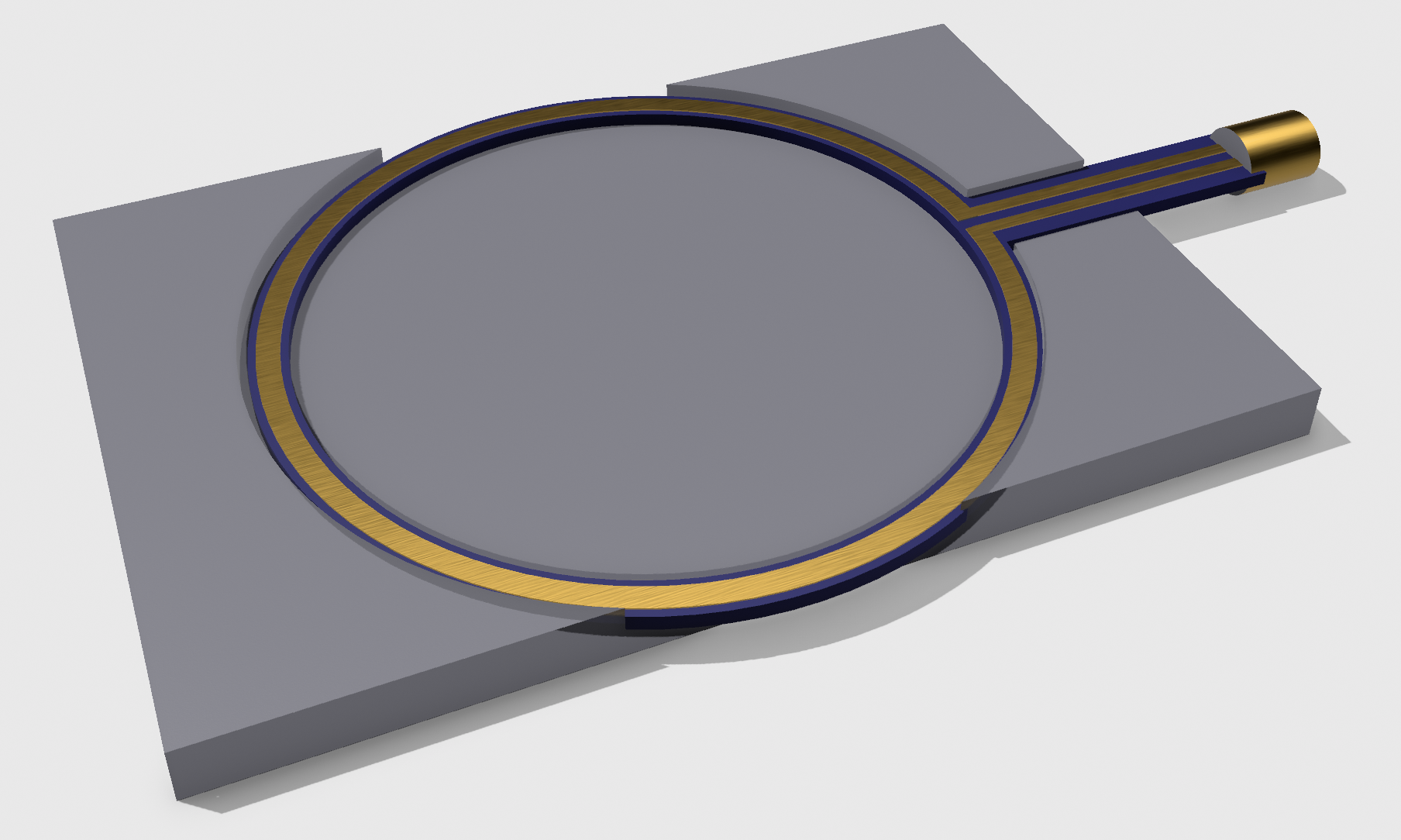
The null exposure result does not exclude endogenous coupling, but it provides no direct support for that mechanism. The planned magnetic-detuning experiment offers a separate test.
Manuscript
A candidate electromagnetic channel for coordination between physically separated Drosophila
Preprint and submitted manuscript, accompanied by code for the coordination statistics and common-mode controls.
Compares within-transition and cross-transition locomotor correlations to estimate coordination beyond the shared light response. Finds that the excess correlation is concentrated in stop-go transitions and is largest in insulating PETG plates. Interprets the material contrast as compatible with electromagnetic coupling while retaining alternative explanations.
The proposed channel remains a hypothesis. The material comparison is consistent with electromagnetic attenuation, but transmission of information between wells has not been observed directly.
Related publications
Spontaneous radiofrequency emission from electron spins within Drosophila: a novel biological signal
Current Research in Neuroadaptive Technology (2022).
Reports passive detection of radiofrequency emission from small groups of living Drosophila at resonant magnetic fields. The signals decline as flies die, disappear after chloroform exposure and increase during thermogenetic neural activation. The authors propose a link to spin-polarized biological electron currents while noting that the source and function remain unresolved.
Electron spin changes during general anesthesia in Drosophila
Proceedings of the National Academy of Sciences 111, E3524-E3533 (2014).
Measures electron-spin responses in living flies exposed to xenon, sulfur hexafluoride, nitrous oxide and chloroform. Finds anesthetic-specific responses, including altered patterns in anesthesia-resistant mutants. Uses density-functional calculations to propose that anesthetics perturb protein electronic structure and cellular electron currents.
Next experiments
If the proposed coupling is magnetic and resonant, a static field gradient should reduce it by shifting neighbouring flies to different Larmor frequencies. Permanent magnets provide this gradient without the drive electronics required by coils.
Higher-temporal-resolution tracking will test whether stop–go transitions align more closely than the current sampling interval can resolve. Failure of the temporal relationship to sharpen at finer resolution would weigh against a direct coupling mechanism.
Separate work has reported spontaneous radiofrequency emission associated with electron spins in Drosophila. That observation provides a possible physical source but does not establish that the emission carries information.
Critical reading report
In the interest of openness, we provide this critical reading of our preprint. It distinguishes the behavioural evidence from the proposed electromagnetic mechanism, identifies alternative explanations and outlines experiments that could resolve them. The report was produced by ChatGPT with Scholar enabled and is published here by the authors for transparency. It has not been peer reviewed. Version 1, 14 August 2026.